Tune in:
APPLE PODCASTS | SPOTIFY | YOUTUBE
Episode Summary
What happens when experienced coaches admit they’ve changed their minds?
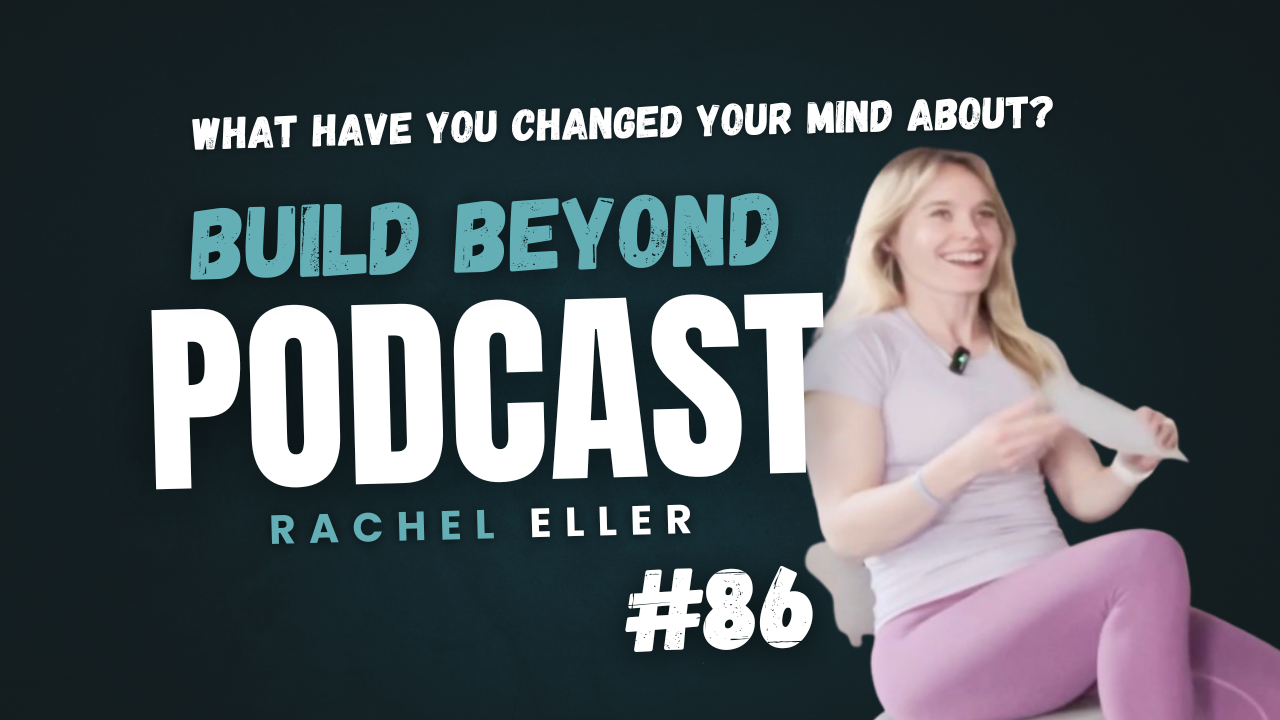
In this episode, I sit down with coach Rachel Eller for an honest conversation about fitness, coaching, pain, nutrition, and the beliefs we’ve had to rethink over the years.
We discuss:
- Why changing your mind is often a sign of growth
- The problem with black-and-white fitness advice
- Why “perfect form” isn’t always the goal
- Fear, low back pain, and lifting with a rounded spine
- Training for performance vs. training for appearance
- Why calorie counting isn’t stupid
- The importance of nuance in coaching, rehab, and health
- How good coaches balance encouragement with honesty
This episode is a deep dive into the realities of movement, health, and behavior change—and why becoming “less wrong” may be one of the most important skills in fitness and life.
What Has Rachel Changed Her Mind About?
#1) The longer I train (myself and others), the less I care how I look and more I care about *what I can do.*
#2) I still don’t love cardio, but I now want (and think I ought) to do something to get my heart rate up besides lifting.
#3) I’ve learned being more frank with a client is the loving and helpful thing to do.
#4) Regardless of your goals (performance or appearance), nutrition matters more than you want it to.
#5) The protein hype is a little overrated. But fiber/fruits and veggies can’t be exaggerated enough!
#6) Steps per day (and daily walks) are underrated.
#7) Most of the time to solve a nagging pain or small injury it’s simpler than you think, and you don’t need a fancy diagnosis. Just deload the movement, tweak form, be patient, and slowly rebuild tolerance. List
What has Chris changed his mind about?
#1) If you don’t keep a neutral spine, you won’t necessarily get injured. Rounding your back isn’t necessarily bad for your spine.
#2) I don’t need to give patients advice. I don’t need to prescribe them a solution to their problems. I don’t know more than the patients, so I shouldn’t necessarily tell them what they need to do.
If they don’t follow my prescription, they are non-compliant.
If they don’t follow my prescription, they are unmotivated to improve.
#3) Routine chiropractic adjustments don’t improve health and prevent pain by correcting misalignments.
#4) Alkaline water isn’t important for health.
#5) Annual blood tests aren’t necessary for everyone, especially without a qualified healthcare provider. Taking supplements based on bloodwork won’t necessarily improve your health and prevent health issues.
#6) Calorie counting isn’t stupid. Eating “clean” isn’t necessarily going to change your life.
#7) Sitting isn’t necessarily the new smoking. “Bad posture” isn’t a real thing.
Chapters
00:00 The Power of Change: Can People Really Change?
03:03 Personal Growth Through Change: Mindset Shifts
06:07 Training for Health vs. Aesthetics: A Paradigm Shift
09:01 The Nuances of Training: Individual Goals Matter
11:49 Rethinking Movement: The Role of a Rounded Back
15:01 Coaching for Individual Needs: The Importance of Nuance
18:03 The Balance of Motivation and Technique in Training
31:43 The Importance of Frank Coaching
45:23 Nuances of Calorie Counting and Clean Eating
Where to find Rachel Eller:
Instagram: @rach.l.fit
Where to find Chris Netley
Instagram: @BuildBeyondHealth
YouTube: @chrisnetleyDC
X (formerly Twitter): @chrisnetleyDC
Facebook: Build Beyond Health, PLLC
